 Bela
I recommend starting with just one ingredient. To make cuticle oil at home, pour 2 teaspoons of jojoba oil into a clean, completely dry bottle. Use it alone, or replace 1 teaspoon with sweet almond oil if you tolerate almonds. Cap and gently shake. Massage one drop around each nail daily, skip fragrance, and avoid broken or irritated skin.
That small bottle is enough to start a simple nail-care routine. You do not need a collection of oils or a scented blend. The useful part is applying a little oil regularly, especially when handwashing leaves the skin around your nails feeling dry.
A Small-Batch Recipe With Just Jojoba Oil
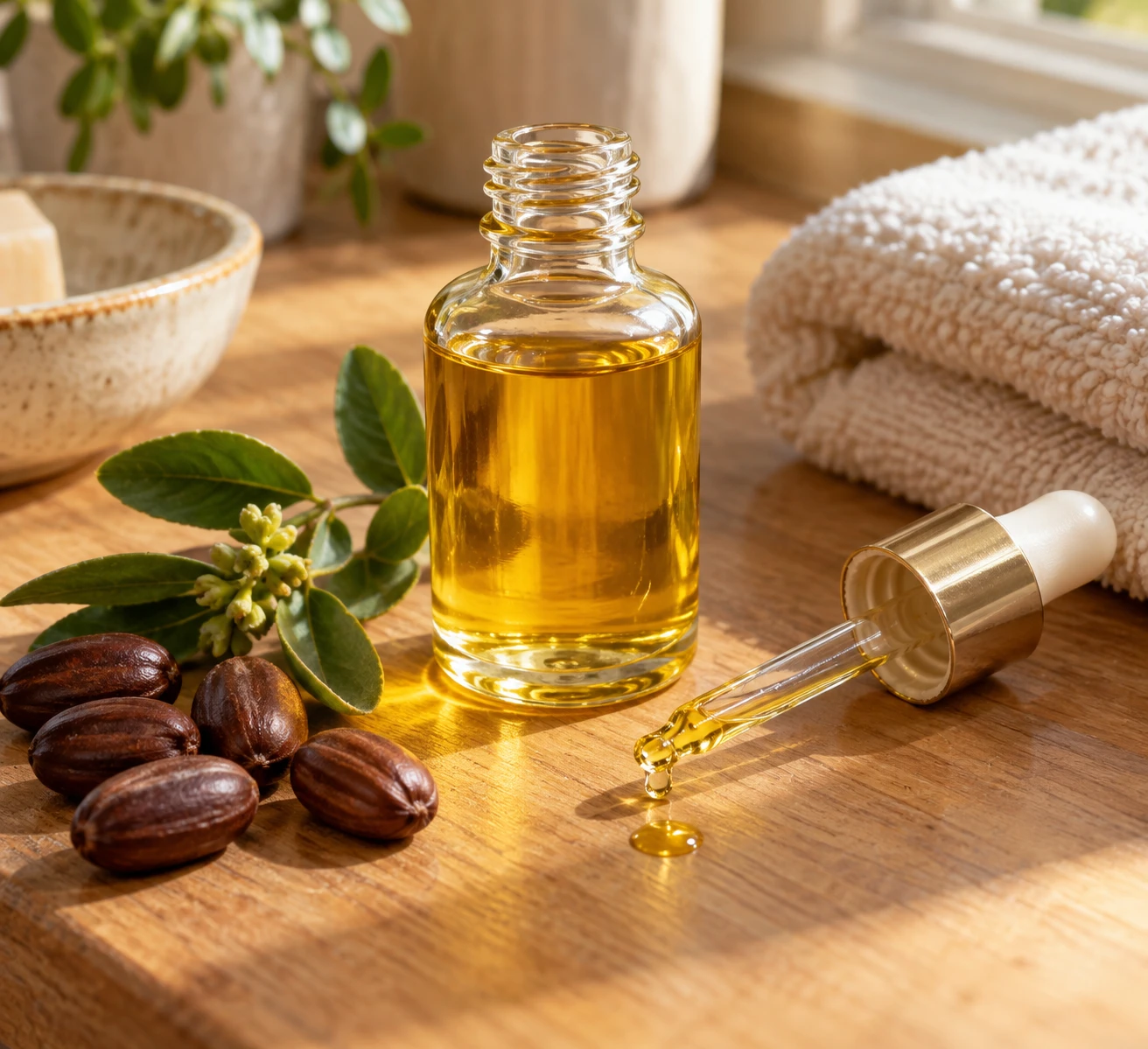
Use 2 teaspoons of plain jojoba oil for your first batch. That makes approximately 10 milliliters, or one-third of a US fluid ounce. A 15-milliliter bottle leaves enough room to close the cap without spilling oil.
Jojoba is technically a liquid wax, although it pours and spreads like an oil. It softens dry skin and leaves a light protective coating that reduces moisture loss. It also resists oxidation, the reaction with air that gradually makes oils deteriorate.
Measure 2 Teaspoons, Not a Number of Drops
Use a clean measuring teaspoon or a small graduated syringe without a needle. Drop sizes change with the bottle opening and the thickness of the liquid, so they are not a reliable way to measure the batch.
All three versions below make the same total amount. I would choose the jojoba-only recipe first, particularly if your skin reacts easily to new products.
| Recipe | Jojoba oil | Sweet almond oil | Approximate total | Best reason to choose it |
|---|---|---|---|---|
| Jojoba only | 2 teaspoons | None | 10 mL | Simplest starting recipe |
| Mostly jojoba | 1½ teaspoons | ½ teaspoon | 10 mL | A small addition of almond oil |
| Equal-parts blend | 1 teaspoon | 1 teaspoon | 10 mL | A blend for someone who already tolerates both |
The almond versions are optional alternatives, not upgrades. You do not need to work through them to get a useful cuticle oil.
Choose Plain Oil and a Practical Bottle
Look for a single-ingredient jojoba oil without added perfume or essential oils. Golden and refined jojoba oils both work. Color alone does not tell you whether an oil will suit your skin.
A small dropper bottle makes it easier to control the amount. A narrow dispensing tip also works well. Dark glass helps limit light exposure, but a clear bottle kept inside a drawer is practical too.
For a first batch, avoid a complicated refillable brush pen. Its narrow channels can be difficult to clean and dry, particularly if it previously held another formula.
Prepare and Apply the Oil in 6 Steps
Mixing the oil takes about 5 minutes once your tools are clean and dry. Washing and drying a reused container takes longer, so prepare the bottle before you plan to fill it.
Use this sequence for either the plain jojoba recipe or one of the blends above.
- Clean your workspace and wash your hands. Set out the oil, measuring spoon, bottle, cap, and a small funnel if needed. Keep them away from a wet sink edge.
- Prepare the bottle and tools. Wash reusable parts with dish soap and warm water, rinse thoroughly, and leave them open to air-dry completely. Clean parts are not necessarily dry parts.
- Measure the oil. Pour 2 teaspoons of jojoba into the bottle. For the equal-parts blend, use 1 teaspoon of jojoba and 1 teaspoon of sweet almond oil instead.
- Close, mix, and label. Tighten the cap and gently shake. Write the ingredients and mixing date on the bottle so you can identify the contents later.
- Test before regular use. Apply a small amount to intact skin on your inner forearm twice daily for 7–10 days. Leave it uncovered and watch for itching, redness, or swelling.
- Apply to intact skin around each nail. Once you tolerate the oil, massage one drop around each nail daily. Keep the dropper above your skin rather than touching it.
For the massage, use the pad of a finger to spread the oil along the base and sides of the nail. About 5–10 seconds per nail is enough to distribute it; there is no need to press hard.
If one full drop leaves a heavy coating, spread the excess across nearby fingertips. Dropper openings vary, and more oil does not mean better results. You want comfortable skin, not a slippery layer on everything you touch.
Give the oil a few minutes before handling paper, fabric, or a phone. If you still have visible pools around your nails, blot the extra with a clean cloth. Do not pour leftover oil from the measuring spoon back into the original supply bottle.
Optional Almond Oil, Essential Oils, and Vitamin E
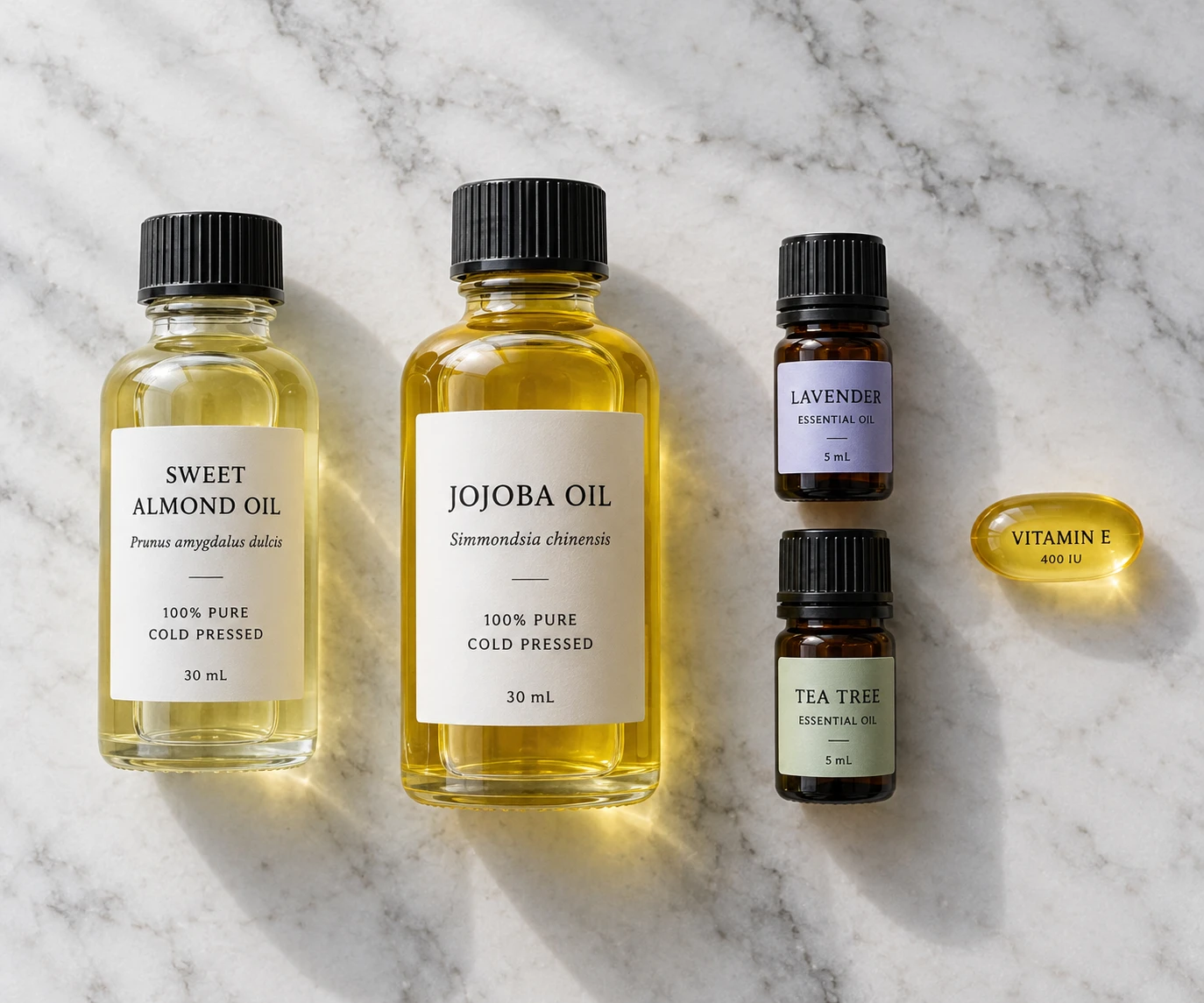
Jojoba oil alone fulfills the purpose of this recipe. Extra ingredients change the feel, scent, or storage needs; they do not automatically make the blend more effective.
Sweet Almond Oil Changes the Feel, Not the Basic Job
Sweet almond oil is another emollient, meaning an ingredient that softens and smooths skin. It can give the blend a slightly richer feel, although that difference depends on the particular oils and how much you apply.
Use sweet almond oil intended for skin care, not bitter almond oil or an almond flavoring extract. For the simplest blend, combine equal amounts of jojoba and sweet almond oil: 1 teaspoon of each.
If you have an almond allergy, leave almond oil out rather than experimenting with it. Plain jojoba avoids that extra ingredient entirely. If you tolerate almonds as food, still test a new skin product before applying it around all your nails.
Leave Essential Oils Out of a Beginner Recipe
Essential oils are concentrated aromatic ingredients, not necessary nutrients for your cuticles. Lavender, peppermint, and tea tree oils can irritate skin or cause an allergic reaction, even when their scent seems mild.
A tiny batch also makes casual drop-based dilution unreliable. One drop from one bottle may not match a drop from another. I would keep this recipe fragrance-free, rather than adding an ingredient that requires another calculation.
Fragrance-free does not always mean odorless. Plain plant oils can have a faint natural smell. You do not need to cover it with perfume, and an unpleasant new smell is a reason to inspect the oil rather than disguise it.
Vitamin E Is Optional, Not a Preservative
Vitamin E can slow oxidation in some oil formulas. It is an antioxidant, not a preservative that reliably controls bacteria, yeast, or mold.
You do not need vitamin E for this small jojoba batch. Adding it does not make a damp bottle safe, and it does not turn an oil-and-water mixture into a stable homemade product.
Skip the practice of squeezing a supplement capsule into the bottle. Capsule contents and added ingredients vary, and this recipe does not need them.
Patch Testing and Skin Problems: Where to Draw the Line
Use homemade cuticle oil on dry but intact skin. Do not apply it to open cracks, bleeding hangnails, or skin that is already inflamed. A simple formula reduces the number of possible triggers, but natural ingredients can still cause reactions.
Test the Finished Blend Before Daily Use
For a home patch test, use a small area on the inner forearm, about the size of a quarter. Apply a normal thin layer twice daily for 7–10 days. Test the actual mixture you intend to use, not just one ingredient.
Stop if the area becomes itchy, red, swollen, or uncomfortable, and gently wash the oil off. Do not keep applying it in the hope that your skin will adjust.
A home test cannot rule out every future reaction. It is a practical screening step, not a diagnosis. A known ingredient allergy is a reason to avoid that ingredient, not a reason to test it yourself.
Leave Cracked or Irritated Skin Alone
Fine dry lines are different from open cracks. If a split stings when you wash your hands, or a hangnail has left a raw spot, keep this DIY oil off that area until the skin has closed and settled.
Do not rub vigorously around a sore nail fold. Massage is only a way to spread oil; pressure does not make the product work better.
Increasing pain, warmth, swelling, or pus can point to an infection rather than ordinary dryness. Cuticle oil does not treat an infection. Have those symptoms assessed instead of adding tea tree oil or another homemade ingredient.
Avoid Cutting the Skin You Are Trying to Soften
The thin skin seal where the nail meets the finger helps keep irritants and microbes out. Cutting or aggressively pushing back that area can leave it sore or damaged.
Apply oil around the nail without trying to lift, scrape, or remove the skin. A visible rim of skin is not something you need to erase.
If a loose hangnail catches on clothing, do not pull it. Carefully trim only the detached piece with a clean nail clipper, without cutting into attached skin.
Keep the Bottle Water-Free and Make Small Batches
Store homemade cuticle oil tightly capped in a cool, dark drawer, away from a sunny window or bathroom heat. Keep water out of the bottle, including water left inside after washing.
A small batch is easier to use while the ingredients are fresh. It also limits how much oil you lose if the bottle becomes contaminated.
Dry the Bottle All the Way Through
After washing a reused bottle, let the parts air-dry separately. A narrow neck, dropper bulb, or roller insert may trap water even when the outside feels dry. Allow overnight or longer as needed; the condition matters more than the clock.
Hold the bottle up to the light and look for droplets. Check the cap and dispensing parts too. Do not wipe the inside with a kitchen towel, which can leave lint and introduce moisture again.
If a container cannot be taken apart enough to clean and dry it, choose a simpler one. For low-waste care, an easy-to-clean bottle is more useful than a clever dispenser that cannot be maintained.
Do Not Add Aloe, Water, Tea, or Hydrosol
This recipe is water-free: it contains oils only. Aloe gel, rosewater, herbal tea, and plain water all change that.
Water and oil separate without a suitable emulsifier, an ingredient that helps them stay mixed. More importantly, water-containing products need an appropriate preservation system to limit microbial growth.
Shaking the bottle before use does not solve either problem. Vitamin E does not solve them either. Apply a separate hand moisturizer if you want that step, rather than pouring it into your cuticle oil.
Label the Date and Watch for Changes
For a simple household routine, I would plan to use a 10-milliliter batch within about 3 months. That is a conservative use-up target, not a tested shelf-life guarantee. Use it sooner if an ingredient’s stated use-by period ends first.
Keep the original oil containers so you retain their ingredient details and storage guidance. Do not top up an old cuticle-oil batch with fresh oil; empty, wash, and completely dry the bottle before refilling.
Discard the batch if it develops an unpleasant rancid smell or shows unexpected changes. If water gets inside, replace it even if it still looks normal. Appearance and smell cannot reveal every form of contamination.
Daily Use Softens Dry Skin, but Does Not Repair Every Nail Problem
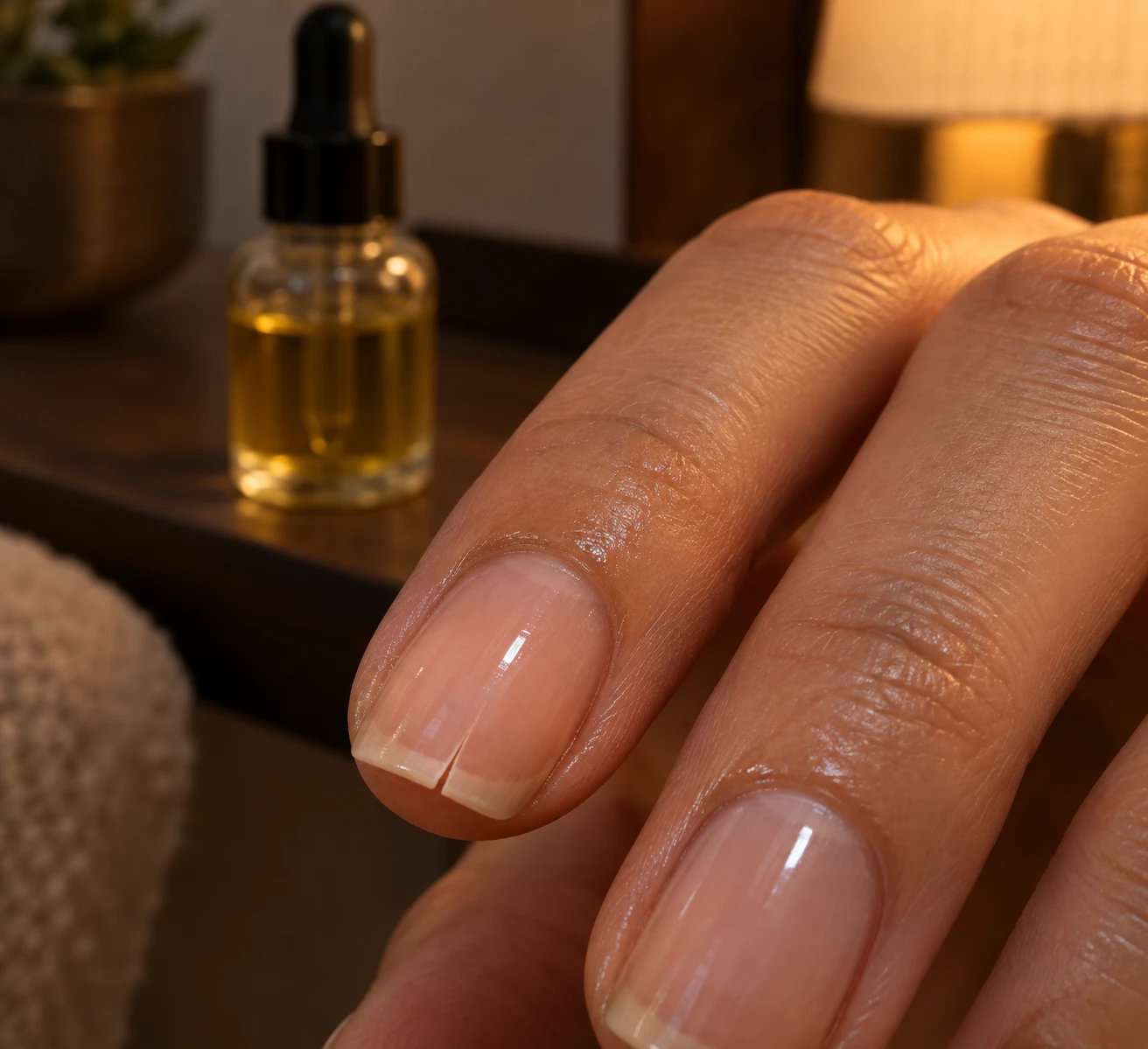
Apply cuticle oil once daily to start. After your evening handwashing is a practical time because you are less likely to wash it straight off. The aim is softer, more comfortable skin around the nails, not a permanent coating.
Pair One Daily Application With Your Hand-Care Routine
Wash your hands as usual, dry them, and apply a fragrance-free hand cream if you use one. Then massage a small amount of oil around the nails. The cream supplies moisture; the oil helps reduce moisture loss and softens the surface.
If your nail folds remain dry and your skin tolerates the oil, add a second application earlier in the day. There is no need to apply it after every handwash. A nearby bottle of hand cream may be more practical during a busy day.
Protect your hands from repeated detergent exposure when washing dishes or cleaning. Otherwise, you may soften the skin at night only to irritate it again the next morning.
Expect Softer Skin, Not Permanently Repaired Nails
Oil can make dry skin feel softer after application. Judge the overall routine after about 1–2 weeks of regular use, rather than expecting a single drop to remove every rough edge.
A split or peeling nail plate does not fuse back together because oil is applied. Fingernails grow slowly, roughly 3 millimeters per month, so damaged areas take months to grow out.
Cuticle oil also does not make nail polish dry faster or guarantee longer wear. Keep the purpose modest: conditioning the nail surface and surrounding skin.
Before painting your nails, remove oily residue from the nail plate so the polish can adhere. You can return to your usual cuticle-oil routine once the manicure has fully dried. If you wear nail extensions, keep the oil around the surrounding skin rather than deliberately working it beneath lifted product.
Frequently Asked Questions
Can I use jojoba oil alone as cuticle oil?
Yes, plain jojoba oil works as cuticle oil without any other ingredients. Pour 2 teaspoons into a clean, completely dry bottle and apply a small amount daily after patch testing. Choose an oil without added fragrance, and keep the dispensing tip from touching your skin.
What proportions should I use for homemade cuticle oil?
Use either 100% jojoba oil or equal parts jojoba and sweet almond oil. For a small equal-parts batch, mix 1 teaspoon of each, giving approximately 10 milliliters total. You can also use 1½ teaspoons of jojoba with ½ teaspoon of almond oil if you prefer mostly jojoba.
Do I need essential oils or vitamin E?
No, neither is needed for this recipe. Essential oils add fragrance and a risk of irritation, while vitamin E may slow oxidation but does not prevent microbial growth. Keeping the formula to plain jojoba makes measuring, patch testing, and identifying any reaction simpler.
Can I use cuticle oil on cracked or irritated skin?
Do not apply this homemade cuticle oil to open cracks, raw hangnails, or irritated skin. Wait until the surface has healed before restarting. If you notice increasing pain, swelling, warmth, or pus, seek medical advice rather than treating the area with oil.